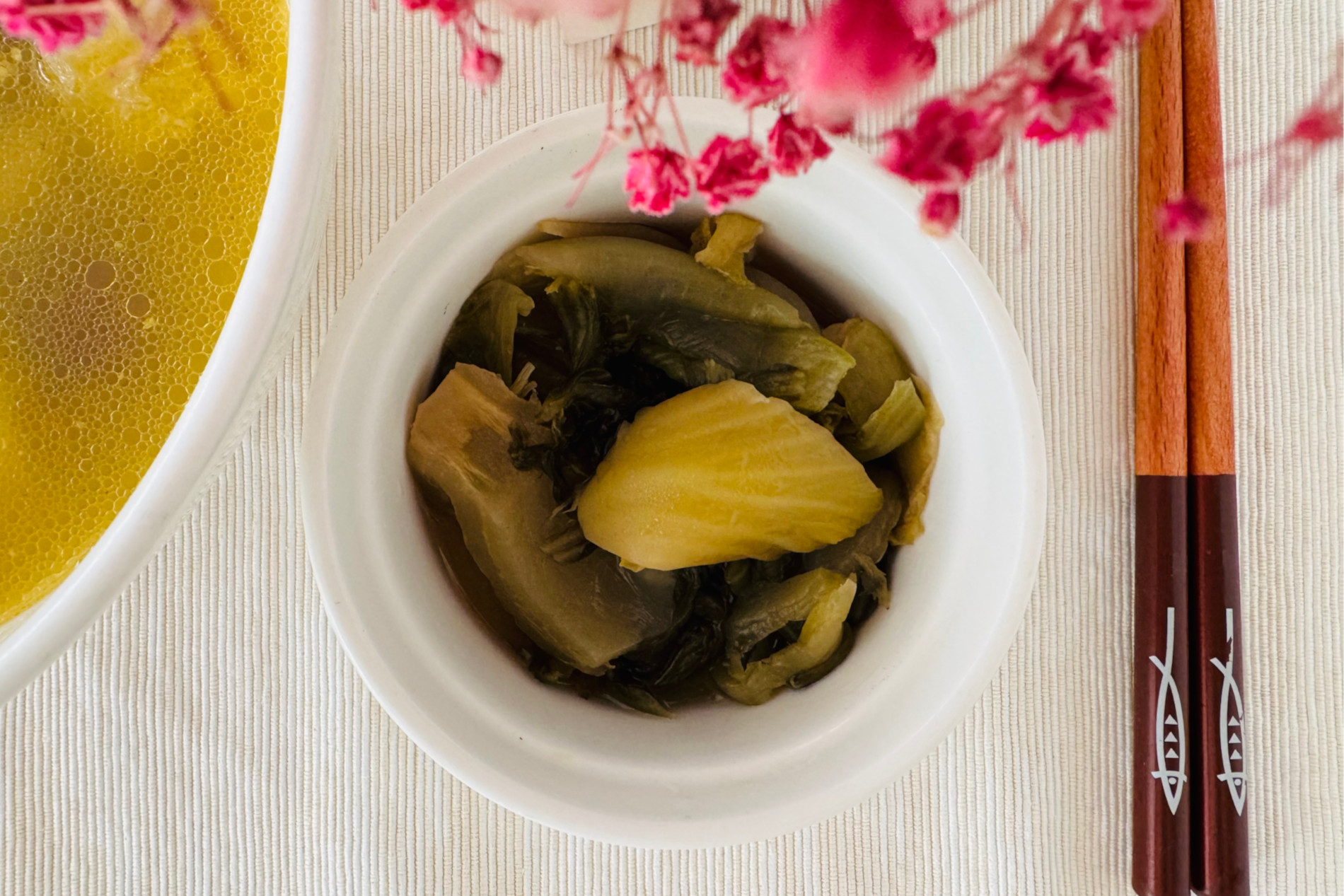
Ancient flavours, modern gut-healing goodness.
Fermented Chinese mustard greens—known affectionately as 咸菜 (haam syun choi)—hold a special place in traditional Chinese kitchens. For generations, families preserved mustard greens to survive long winters, stretch food supplies, and create a deeply savoury ingredient that enhanced humble meals with tangy, umami richness.
In old villages across Guangdong and Fujian, you would see grandmothers squatting in courtyards, massaging coarse grains of salt into freshly harvested mustard greens. Some tied the vegetables onto bamboo poles to dry under the sun before brining them; others packed them straight into large clay urns to ferment slowly in cool storerooms. Each household had its own method, but the philosophy was the same:
Let nature transform simple ingredients into something nourishing, long-lasting, and full of life.
Today, we get to honour that heritage — but instead of commercial shortcuts or vinegar-based quick pickles, we’ll be returning to the original method: natural lacto-fermentation, which also happens to be perfectly aligned with the GAPS Nutritional Protocol.
This is food as medicine, exactly the way our ancestors made it.
Why Fermented Mustard Greens Are Perfect for Gut Healing
Chinese mustard greens are part of the Brassica family — cousins to cabbage, kale, and mustard. When fermented naturally with only salt, they become:
✨ Rich in lactobacilli (friendly bacteria that support gut health)
✨ Easier to digest
✨ A natural source of enzymes
✨ A gentle detoxifier
✨ A beautifully tangy, appetite-wakening condiment
In GAPS, we aim to introduce fermented foods early and often, because they help replenish the microbial diversity that your gut needs to heal, digest, and thrive.
Traditional Meets GAPS: The “Salt Solo” Method
This recipe uses a pure salt-brine fermentation — no vinegar, no sugar, no commercial starter. It’s the same method used for centuries, and still the method that produces the best flavour and the highest probiotic activity.
Salt does three important things:
- Inhibits harmful microbes so the right bacteria can flourish
- Draws water from the vegetable, creating its own natural brine
- Creates the perfect anaerobic environment for lacto-fermentation
This is the authentic, old-world way — simple, natural, and incredibly effective.
Homemade Fermented Chinese Mustard Greens (咸菜) GAPS-Friendly | Traditional | Lacto-Fermented
Ingredients
- 1 quart (approx.) Chinese Mustard Greens (芥菜)
- 1–2 tablespoons natural sea salt or Himalayan salt
Note: Mustard greens shrink significantly once salted and kneaded.
Instructions
1. Prepare the Mustard Greens: Wash thoroughly. Shake off excess water.
Cut into smaller pieces for easier packing and even fermentation.
2. Salt & Knead: Sprinkle 1–2 tablespoons of sea salt over the greens.
Use your clean hands to scrunch, squeeze, and knead the leaves and stems for a few minutes. You’ll notice:
- The greens become limp
- Water begins to draw out
- A natural brine forms at the bottom
This is exactly what we want.
3. Pack Into a Jar: Transfer the greens and all the brine into a wide-mouth mason jar.
Press down firmly to remove large air pockets. Ensuring that the brine covers the vegetables completely.
Leave at least 2 inches of space at the top for expansion as the mustard greens
ferment.
4. Ferment (No Burping Needed!): Cap with lid and seal tightly. If you leave enough room between the top of the vegetables and the lid, your jar will not leak on your counter, nor will it explode or bow with the pressure of fermentation.
Leave on counter at room temperature a minimum of 5–7 days, or until the lid
becomes taut under the pressure of your finger. The greens will turn a yellowish colour. (This is also why the store-bought ones are also dyed with yellow food coloring to resemble the traditional way of making it.) More brine develops as fermentation continues. The flavour continues to deepen over time. (If you prefer a more tangy咸菜, you may leave it for 3 weeks or more.)
Once the initial fermentation is done, transfer to the fridge.
Notes & Tips
✔ Do NOT burp the jar — fermentation is anaerobic, and lactobacilli don’t like oxygen.
✔ Anything sticking out of the brine may oxidize — keep all leaves submerged.
✔ The longer it ages, the more tangy and complex the flavour becomes.
✔ Fermented mustard greens last months in the refrigerator.
How to Use Your Homemade 咸菜
Your fermented mustard greens are now ready to enjoy:
- Stir-fried with sliced beef
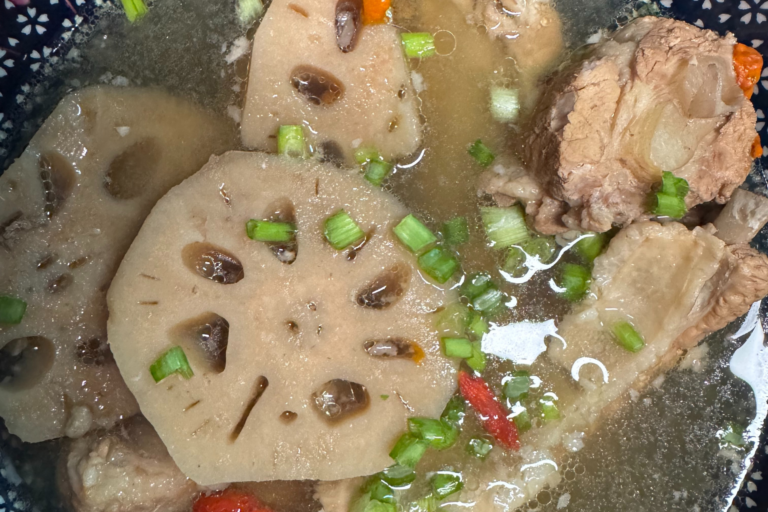
- Added to GAPS meat stocks, soups, and duck broths
- Eaten as a tangy, crunchy probiotic side dish
- A splash of brine to season soups for natural umami
It’s incredibly versatile — and bursting with gut-friendly goodness.
Final Thoughts
Making your own fermented mustard greens is more than just a recipe —
it’s a return to tradition, a nod to ancestral wisdom, and a powerful way to support gut healing naturally. With only two ingredients — vegetables and salt — you’re partnering with nature to create something alive, nourishing, and deeply flavourful.
If you’re exploring GAPS and want to learn how fermented foods can restore your gut, join us at GAPS for Families.
🌿 Explore recipes, healing principles, and step-by-step guides.
🌿 Contact us if you’d like to join our upcoming GAPS tiny challenge for mums.
Let’s rebuild the gut, one healing recipe at a time. 💛